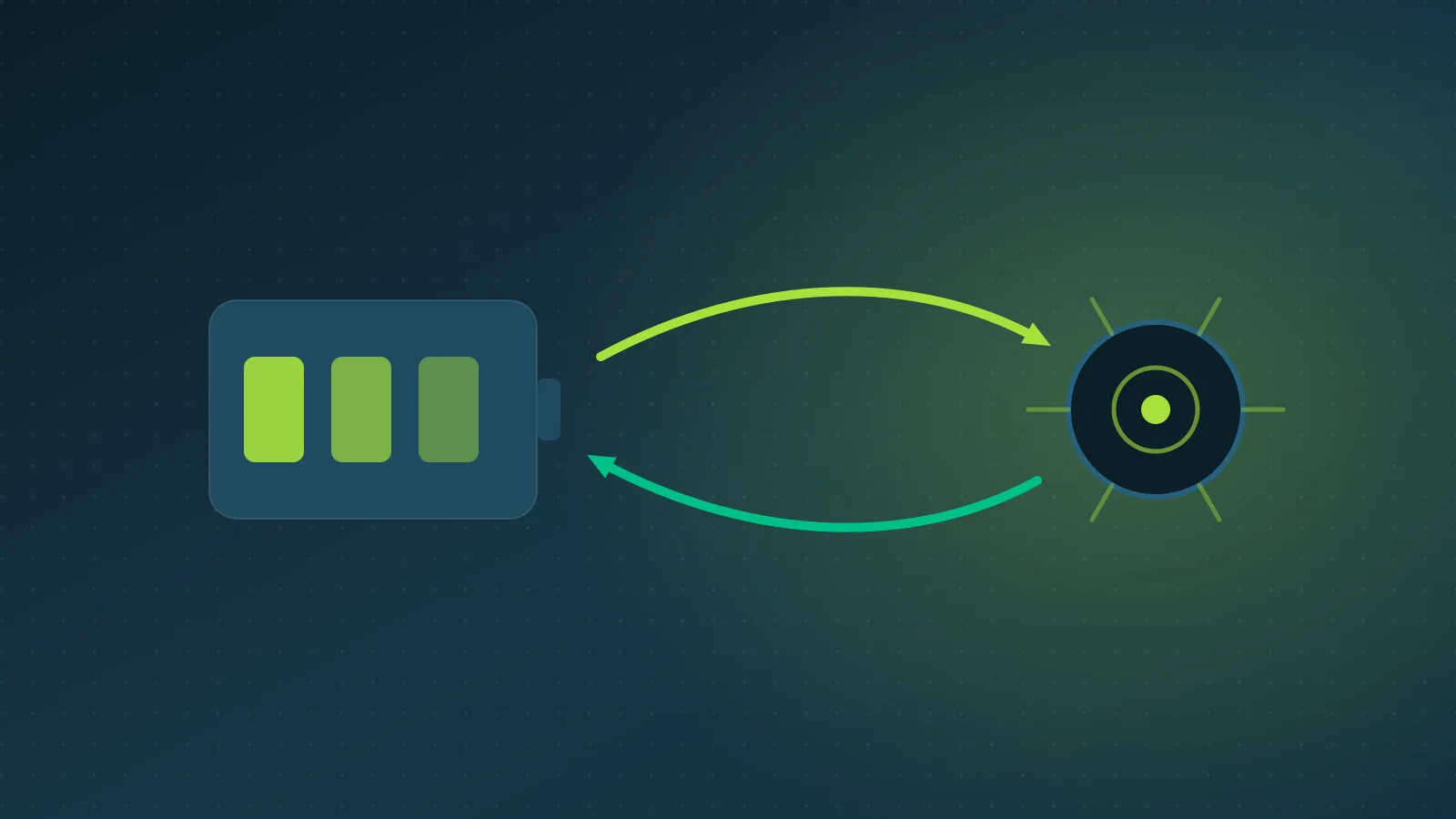
The car as a battery for the home, the building and the grid is no longer a vision technically. What separates V2L, V2H, V2B and V2G, why the order decides feasibility, and the three questions to settle before investing.
A mid-range electric car carries a battery several times the size of a domestic storage unit, and it stands still most of the time. Wanting to get that energy back out is an obvious thought. Turning it into a business case is not — at least not everywhere yet.
The reason is rarely the technology. It is almost always the order in which the four use cases get harder.
Four acronyms, four levels of difficulty
V2L — vehicle to load. The vehicle powers a device through a socket. No grid draw, no export, no approval. Some vehicles can do it from the factory. Useful on a building site, irrelevant in energy terms.
V2H — vehicle to home. The vehicle supplies a single house, typically to shift self-generated solar power into the night. The connection counts as a generation or storage connection and has to be registered with the grid operator, but the circuit stays behind the house connection.
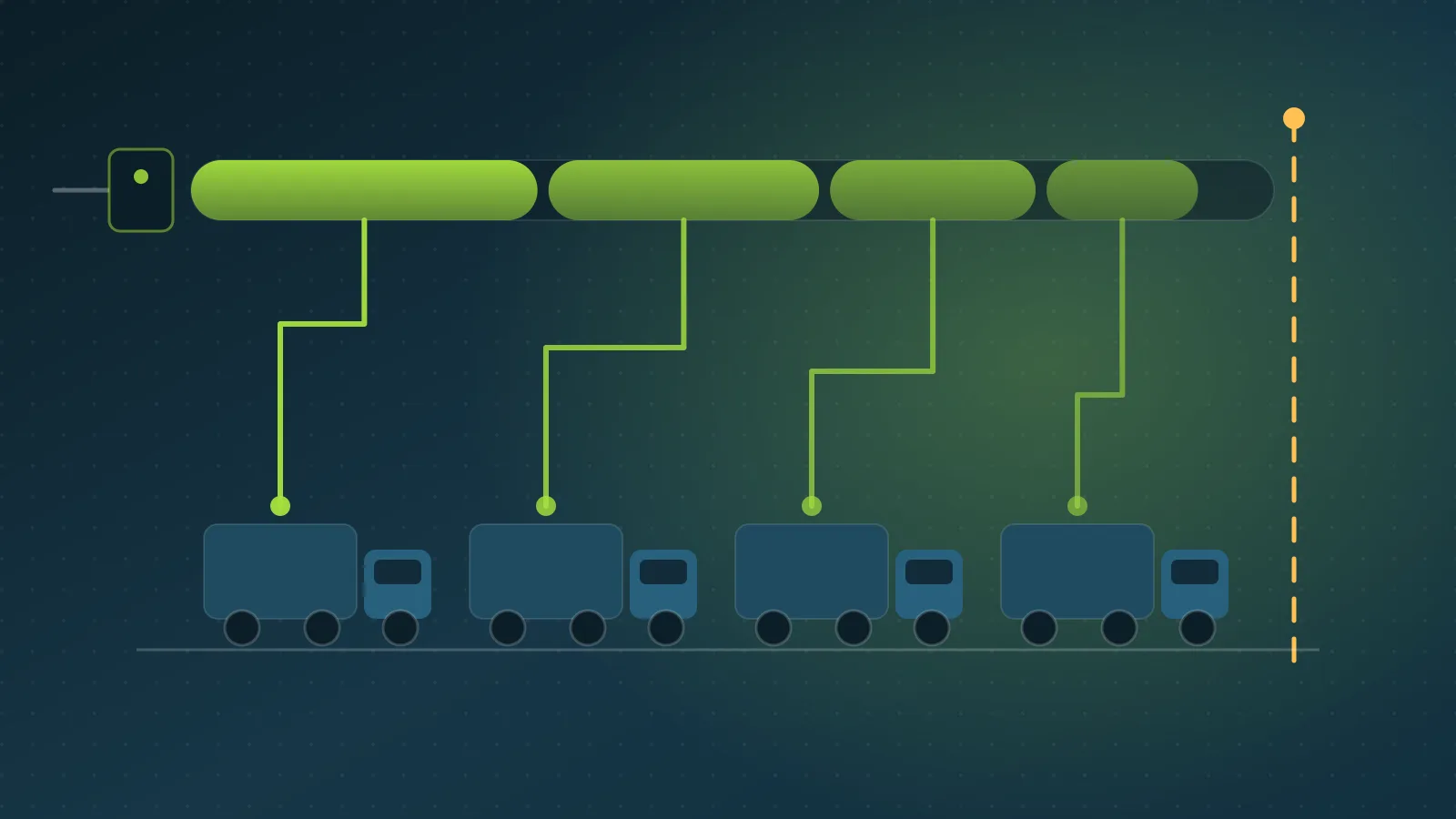
V2B — vehicle to building. The same for a commercial property: shaving peak load, raising self-consumption, backup capability. This is where the most solid economic benefit sits today, because the demand charge is a real cost that recurs every year.
V2G — vehicle to grid. Energy goes into the public grid and is marketed. Technically the smallest step beyond V2B, and the largest one in regulatory terms.
The practical recommendation follows from that order: build the business case on V2B today and treat V2G as an option that arrives later — not the other way round.
AC or DC: the fork that decides the hardware
Exporting means that somewhere an inverter turns direct current from the battery into grid-compliant alternating current. The only question is where that inverter sits.
With DC bidirectional charging it sits in the charging station. The vehicle only has to allow direct current in both directions. The station becomes more complex and more expensive, but the route works with comparatively many vehicles.
With AC bidirectional charging it sits in the vehicle. The wallbox stays simple and the requirement moves to the manufacturer — to the one place where it cannot be retrofitted in software.
Both routes require vehicle and charge point to agree on direction, power and limits. That is standardised in ISO 15118-20. The older, widespread edition -2 does not provide for it. This is the concrete question to put to any offer advertising itself as "V2G-ready": which edition, which firmware — and how much of it is enabled today? It is the same standard that carries Plug & Charge.
Three questions that come before the technology
1. The metering concept. Once energy flows in both directions, one meter is no longer enough. Import, export, self-generation and vehicle charging have to be recorded so that it can afterwards be established which kilowatt-hour came from where. If third parties are billed — tenants, employees, charging customers — metrology law requirements come on top. The metering concept is not a formality at the end of the project; it co-determines whether the use case can be billed at all.
2. Double charging. Electricity drawn from the grid, stored and later exported can in principle be burdened twice with grid fees, levies and surcharges. For stationary storage there are relief provisions. Whether and under which conditions a vehicle is treated the same way is not conclusively settled and is currently being developed further. For a business case that means: anyone budgeting V2G revenue today is budgeting an assumption, not a figure.
3. The battery. Cycles, warranty conditions and whether the manufacturer permits export at all belong in the assessment. Ageing from shallow, grid-serving cycles is by current understanding lower than long assumed — but a manufacturer's warranty statement is a contract text, not a state of research.
What you can do today without betting
The build-out that makes V2G possible later is the same one that pays for itself beforehand:
- dynamic load management that knows the connection and every load on site — the basis for any later control, and already today the reason charging infrastructure grows without a grid upgrade (see load management);
- a metering concept that provides for export from the outset, even if nothing flows back at first;
- asking about ISO 15118-20 when procuring, even if the function is only used later;
- space and cable cross-section for DC equipment where it is eventually meant to stand.
None of that is a V2G investment. All of it is the precondition — and each element pays off regardless of whether the regulatory question is answered in two years or five.
What to check
- Which use case carries your business case? V2B with peak shaving is solid today; V2G is not yet.
- AC or DC? The decision determines whether the requirement sits on the wall or in the vehicle.
- Which standard and which firmware? "V2G-ready" without a version is not a commitment.
- Is the metering concept agreed with the grid operator? Before ordering, not after.
- What do the vehicle manufacturer's warranty terms say? In writing.
If you want to build a site so that it can go bidirectional later: get in touch.
As of 14 June 2022. Bidirectional charging is regulatorily in motion; the conditions described here should be checked against their current state before an investment decision. This article does not replace legal or tax advice.
Questions about your charging infrastructure?
We're happy to advise you on load management, incentives, and the right aCharge product.
Request a consultation