The second call of the Bavarian programme “Ladeinfrastruktur für Elektrofahrzeuge in Bayern 2026–2029” subsidises charge points, grid connection and buffer storage for freight transport. It pays for hardware — not for operation. What sits between the grant decision and a working depot.
Funding for charging infrastructure
With the second call of its programme “Ladeinfrastruktur für Elektrofahrzeuge in Bayern 2026–2029”, the Free State of Bavaria is supporting charging infrastructure for electrified freight transport. For hauliers, own-account transport operators and construction firms this is a real opportunity to convert the fleet step by step: the subsidy covers the most expensive part of an electric truck depot — the fast-charging points, the grid connection, the buffer storage.
What the grant pays for is hardware. What it does not pay for is operation: how the available power is shared between several trucks, who is allowed to charge, how sessions are recorded and billed. That is what decides whether a funded installation becomes a depot that holds the schedule.
What the second call funds
According to Bayern Innovativ, the call is aimed at commercially active companies with a branch or place of business in Bavaria that operate in freight transport. It funds stationary, non-publicly accessible conductive DC fast-charging points for electric commercial vehicles, together with the required grid connections and buffer storage.
The key figures published there:
- Funding rate: 40 % of eligible costs, 10 percentage points more for small and medium-sized enterprises, plus a 10 % innovation bonus (capped at €20,000).
- Cap per charge point: €10,000 below 250 kW, €20,000 from 250 to under 600 kW, €60,000 from 600 kW.
- Grid connection: from €10,000 at low voltage up to €75,000 at medium or high voltage, or with battery storage.
- Cap per applicant: €250,000 per application, €500,000 across all applications in this call.
- Submission window: 14 September 2026, 10:00 to 16 October 2026, 16:00.
- Commitment: a three-year operating obligation during which only the applicant's own vehicles or those of fixed partners may charge.
Two of those points deserve particular attention.
It is not first come, first served. Applications are assessed by the expected environmental benefit — diesel saved — per euro of funding, not by the date they arrive. An applicant who can show plausibly how many vehicles will actually charge how much is better placed than one who lists charge points. That calculation needs an operating concept, not a bill of materials.
No early start. Ordering before the grant decision forfeits the claim. Application first, order second — the most expensive avoidable mistake in any funded project.
Only the call itself is binding. The details, forms and deadlines are at Bayern Innovativ. We do not administer this subsidy and we do not file applications.
Five questions the grant does not answer
Capable charging infrastructure is more than charge points. As soon as several electric trucks are to charge at once, five questions arise:
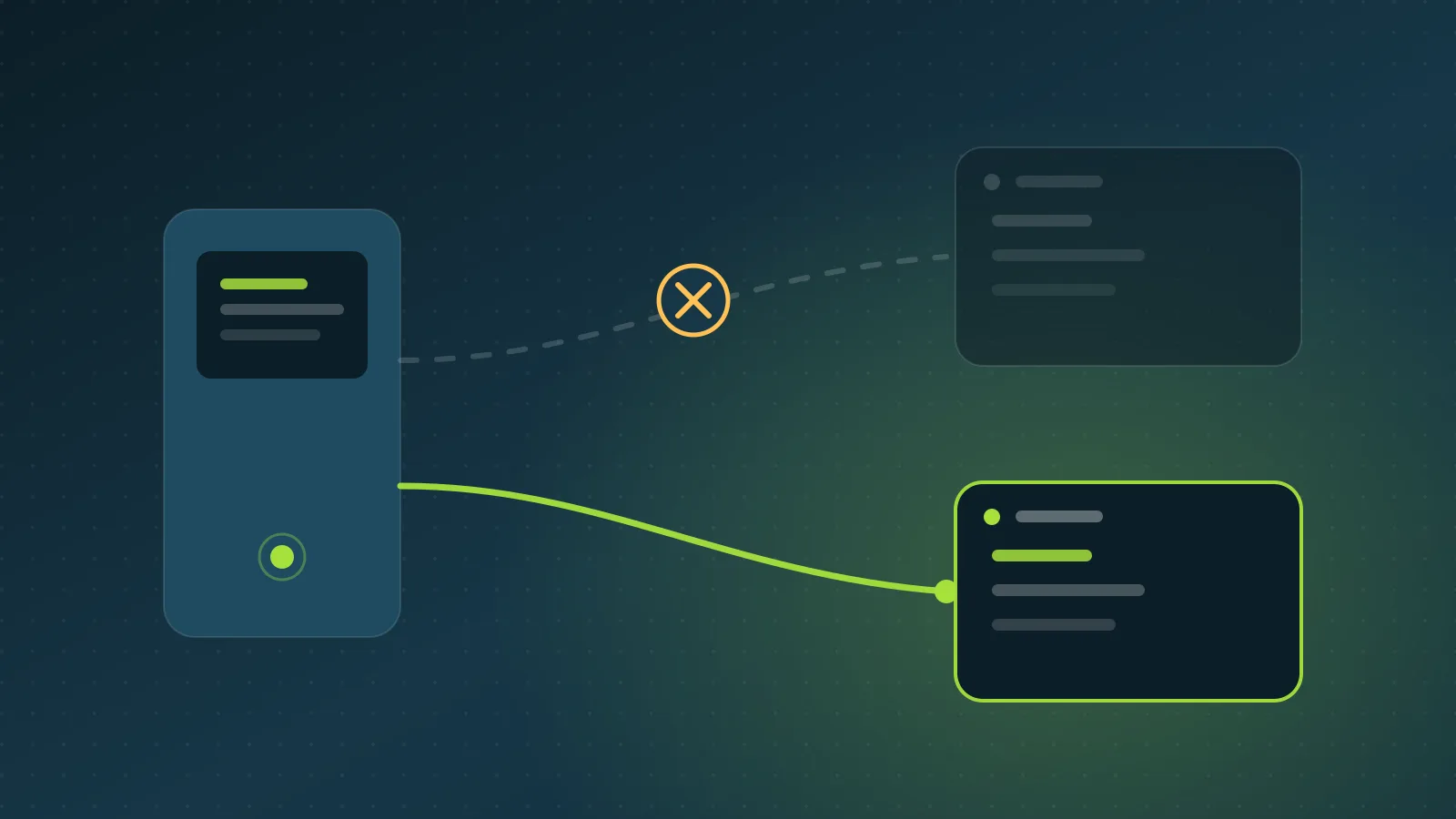
- Is the existing connection capacity enough? Without control, the site has to be sized for the worst case — every charge point at full power at the same time. That is almost never the case operations actually run.
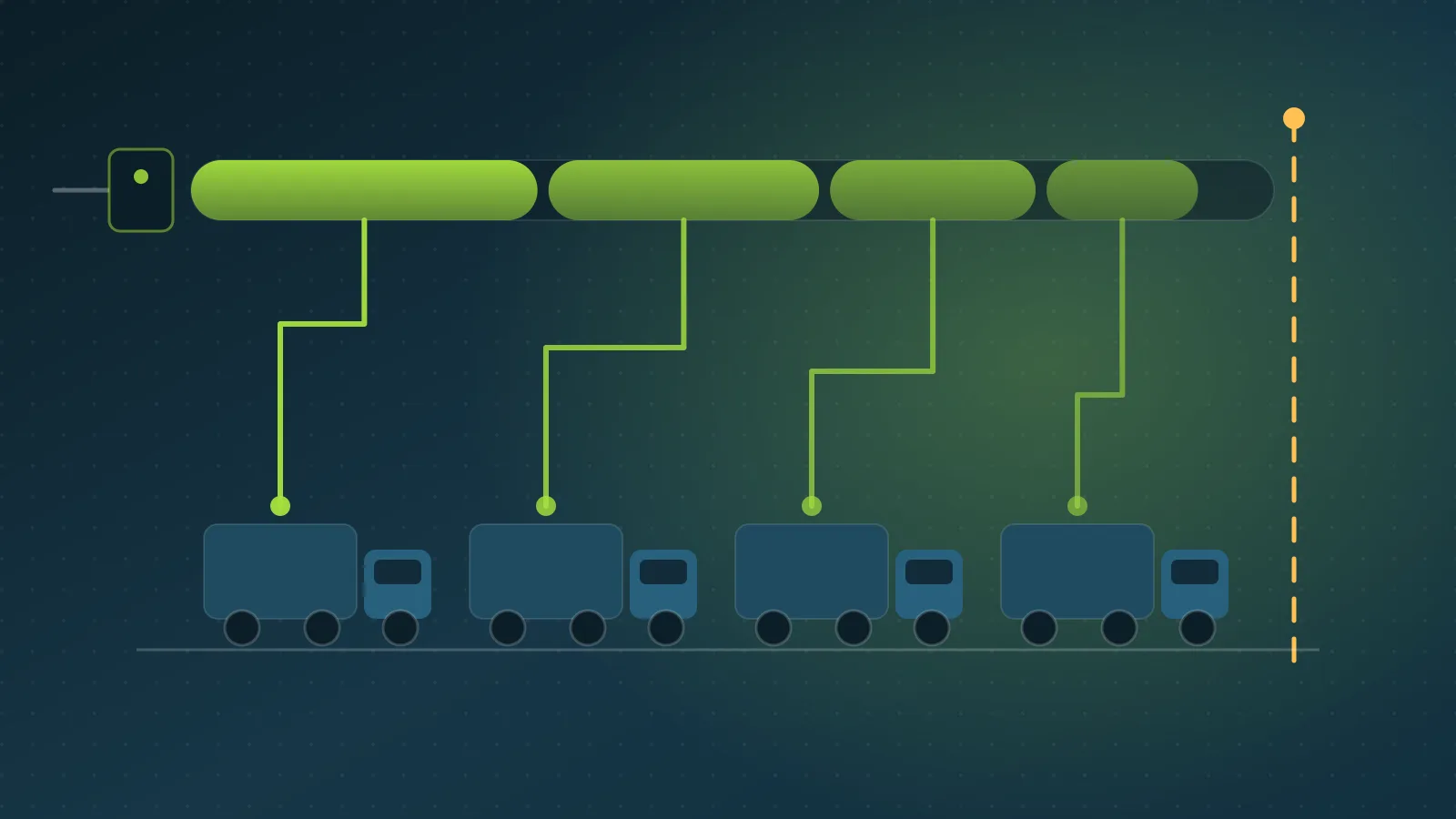
- How is the available power distributed? Equally across all vehicles, or according to what the next departure needs?
- Who is allowed to charge, and on what terms? Own vehicles, partner vehicles, subcontractors — on different tariffs.
- How are individual sessions recorded and billed? Per vehicle, per cost centre, and defensibly enough to invoice a third party.
- How does the site stay visible? A charge point that has been down since last night otherwise surfaces on the morning of departure.
Under this call, question 3 is not a convenience: if only the applicant's own vehicles and those of fixed partners may charge during the three-year operating obligation, access control is a funding condition. It has to be enforced technically and, if challenged, demonstrable.
Why this weighs more heavily for trucks than for cars
The call's own power classes say it: it distinguishes charge points below 250 kW, from 250 kW and from 600 kW. A single point in the top class therefore has more connected power than the entire grid connection of many businesses — and a depot rarely has just one.
That is why simultaneity is the decisive quantity. A depot does not need to charge its vehicles quickly, it needs to charge them in time; how much connection capacity that saves is worked through in our article on fleet optimisation. The logistics and commercial vehicles page collects the constraints specific to truck depots.
What aCharge contributes
- Dynamic load management. Available power is distributed across the charge points as demand requires — without unnecessary peaks and, wherever possible, without an expensive grid upgrade. aCharge DYLAMO regulates not only the charge points but the refrigeration plant, workshop, heat pump and PV on the same connection. How that behaves across a charging day can be explored on the load management page.
- Central management. Charge points, users, access rights and tariffs are managed centrally in aCharge Cloud — across several sites as well.
- Metrology-compliant billing. Sessions are recorded automatically, attributed to the vehicle, user or customer and billed — the precondition for invoicing partners and subcontractors at all.
- Vendor-independent. Charging hardware from different manufacturers is integrated over standardised interfaces: OCPP and Modbus TCP side by side, AC and DC. What separates the expansion stages is set out in the product comparison.
- Monitoring. The installation stays visible — from a single charge point to a site with several charging hubs.
That is what turns funded charging infrastructure into charging infrastructure that can be operated, scaled and used economically.
Our approach
Not simply installing as many charge points as possible. Rather distributing the energy that is there intelligently, managing it transparently and billing it cleanly.
This is not an argument against expansion — it is the order in which expansion stays affordable. A site that knows and controls its simultaneity often never needs the transformer it would have needed immediately without control.
What to check before applying
- Do you know your load profile? Not annual consumption but the quarter-hour values at the grid connection point. They decide how many charge points the connection carries.
- Is the departure plan settled? Departure times and target states of charge are the most valuable input a depot has — and the only one that cannot be measured.
- Which protocols do the planned charge points speak? Being able to regulate OCPP and Modbus TCP side by side determines whether you can buy freely later.
- Is access control resolved? In this call it is a condition, not a feature — including how partner vehicles get billed.
- Is the order right? Application first, order second. And the window runs from 14 September to 16 October 2026.
If you are planning an electric truck depot and need the operating concept that goes with the application, get in touch.
As of 31 August 2026. All statements about the funding call are taken from Bayern Innovativ's description and summarised here for orientation; only the call and the funding directive are binding. Acemo is neither the granting authority nor a funding consultancy.
Questions about your charging infrastructure?
We're happy to advise you on load management, incentives, and the right aCharge product.
Request a consultation