Everon went dark on 1 December 2025 and the charge points are still on the wall. What a backend migration technically involves, what has to leave the old account before it closes, and where migrations actually fail.
On 1 December 2025 Everon was switched off — the platform through which EVBox charge points were managed, authorised and billed. It followed the decision by parent company Engie to wind up the EVBox group; EVBox had already stopped supplying charge points in 2024.
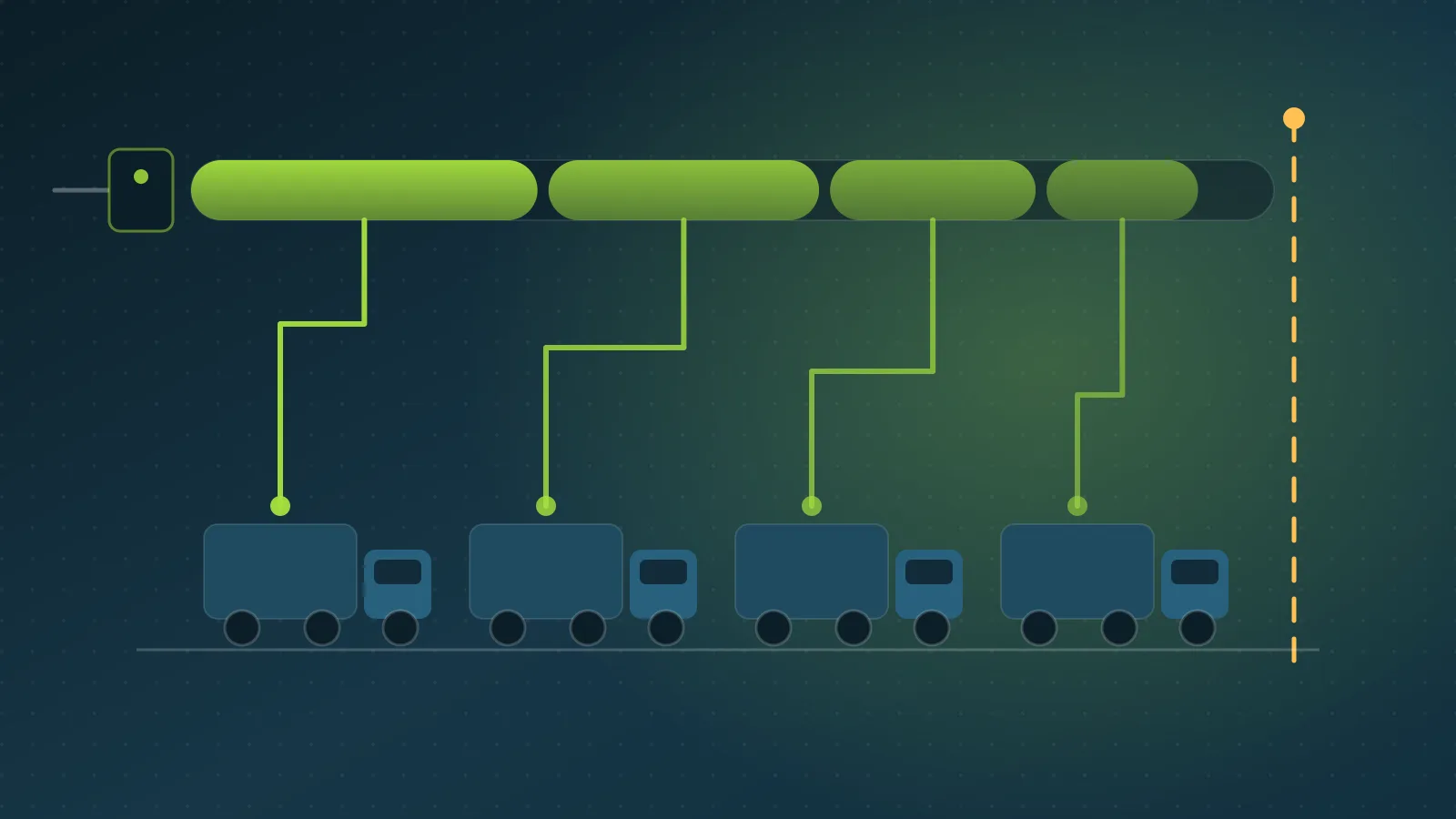
For operators that did not mean their charge points were broken. It meant the counterpart was gone. The station is still on the wall, still has its calibrated meter, its installation and its sign-off — it simply has nobody left to talk to. Authorisation, RFID, tariffs, reports: all functions that lived in the backend, not in the device.
That distinction is what decides the cost. A broken charge point is a hardware problem. A discontinued backend is a configuration problem.
Why this will not stay an isolated case
A charge point is a construction investment with a service life of ten to fifteen years. The backend that controls it is a subscription with three months' notice. That asymmetry is not an accident, it is the normal shape of things: most operators will change the software behind their charging infrastructure at least once while the hardware stays put.
The triggers are interchangeable — a group decision, an acquisition, an end-of-life notice, a price change, a feature set that no longer fits. What matters is not the trigger but how expensive a switch turns out to be when it comes. And that is decided much earlier, at procurement: buy charge points that talk to only one backend and you have paid for the software along with the concrete.
What a backend switch technically is
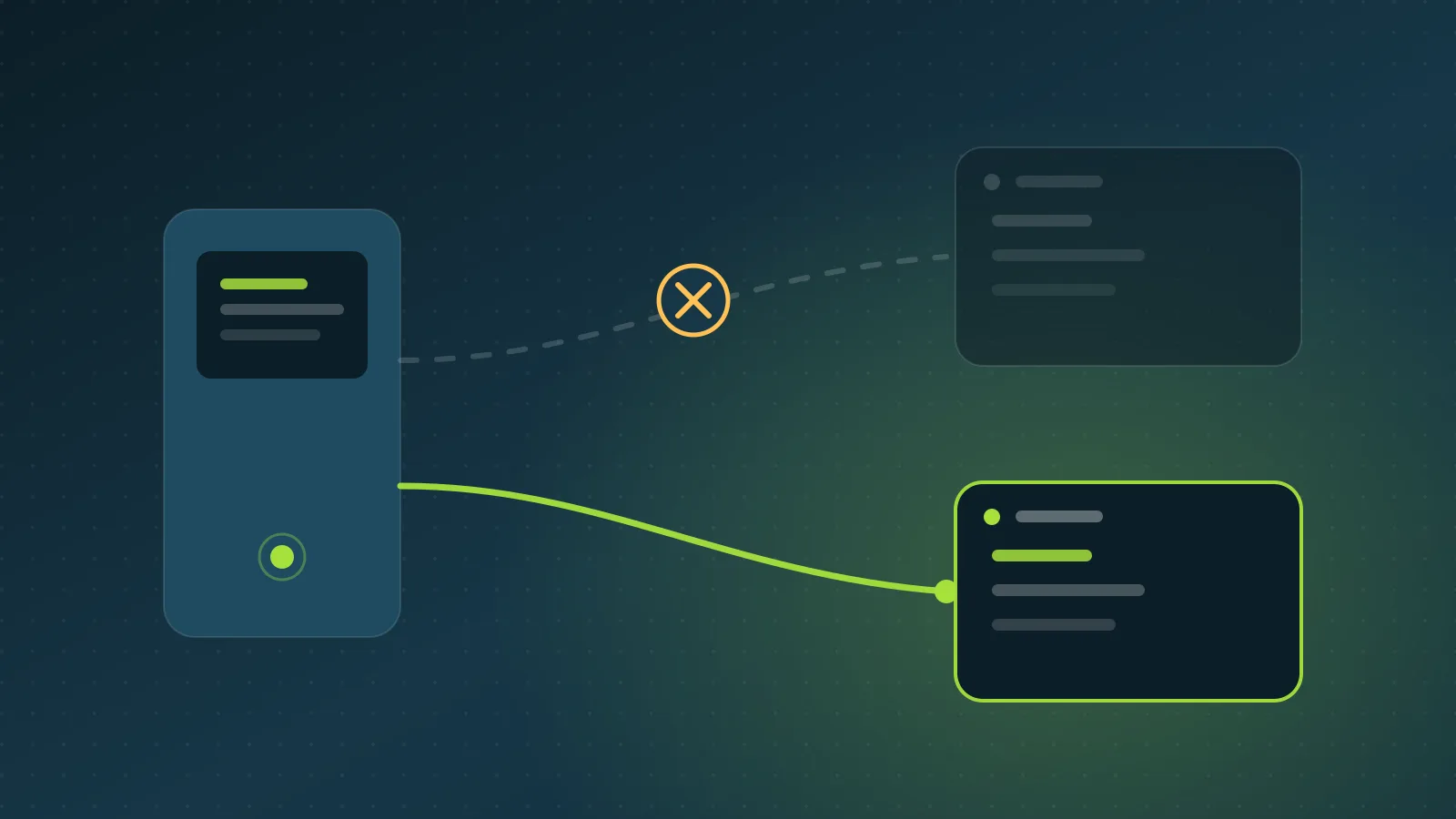
Less than most people expect. A charge point opens the connection to its backend itself — over WebSocket, to a URL configured in the station. A switch consists, at its core, of replacing that URL and restarting the station.
Three values have to line up:
- The endpoint URL. The address of the new backend,
ws://or — for OCPP 1.6 Security and 2.0.1 —wss://. - The ChargePointId. The name the station announces itself under. It has to be identical on both sides, case included. By far the most common reason a station connects but never appears in the portal.
- Credentials, if the backend requires them — under OCPP, HTTP Basic Auth or a client certificate.
After that the charge point registers itself and appears in the new portal for approval. No on-site technician is needed, as long as somebody can reach the station's configuration interface.
The rest of the switch is not technology but organisation: users, cards, tariffs and the billing run have to be rebuilt in the new system. That is the part that costs time — not the URL.
Six things to settle first
1. Can you get into the station? This is the real hurdle. A charge point's configuration interface is usually password-protected, and with bundled offerings the credentials often sit with the installer or the previous provider rather than the operator. Settle this before choosing anything — without access to the station, every backend comparison is academic.
2. Which OCPP does the station actually speak? Ask for the specific firmware version, not the product family. OCPP 1.6J is the practical floor; below it things turn vendor-specific. Whether a station can do 1.6 Security or 2.0.1 often depends on a firmware release that is free — but only for as long as the manufacturer still publishes it.
3. Is the firmware still obtainable? The uncomfortable special case. If the manufacturer no longer exists, the last published firmware is the last there will ever be. Archive it while the download page is still up.
4. How is the station connected? LAN, Wi-Fi or cellular. On cellular the SIM often belongs to the old provider and is deactivated with the contract — in which case connectivity, not the backend, is your problem. Check whether the station accepts its own SIM or whether moving to LAN or Wi-Fi is the sounder route.
5. What depends on billing? Where billing is metrology-compliant, the new backend has to process the station's signed datasets and output them in a form that remains verifiable with transparency software. That is a check, not a checkbox.
6. Is roaming live? Other providers' charging cards only work once the roaming connection is re-established in the new backend — over OCPI or OICP. At public sites that is not an extra feature, it is the revenue.
What has to leave the old account before it goes
The most expensive mistake in a shutdown is not a technical one. It is closing the old portal before the data is out. The account usually takes the history and the user records with it — and the retention obligations do not leave with them.
What to export while you still can:
- Charging sessions and billing records across the full retention period, in raw form rather than as a PDF summary.
- The metrologically signed datasets, where they live in the backend rather than in the station.
- The user and card list with RFID UIDs. An RFID card without its mapping to a person or a cost centre is a piece of plastic — and that mapping is exactly what gets deleted.
- Tariff and price structures, including validity periods. Somebody will ask why an invoice from last year came to that amount.
- Station master data: serial numbers, meter numbers, EVSE IDs. The EVSE ID above all, if your sites appear in roaming directories.
What stays and what gets rebuilt
| Stays as it is | Has to be rebuilt |
|---|---|
| Charge point, meter, cabling | User accounts and RFID mappings |
| Grid connection and installation | Tariffs, prices, authorisation rules |
| Metrological approval of the hardware | Billing run and payment collection |
| Site, mounting, construction work | Roaming connection (OCPI/OICP) |
| Local load management, where standalone | Reports and analytics |
The left column is why a backend switch is not a fresh investment. The right column is why it still needs a project plan.
The connection itself: SIM, Wi-Fi and a 2028 deadline
One point regularly overlooked on older charge points, and unrelated to the backend: German network operators are switching off GSM. Telekom names the end of June 2028, Vodafone the end of September 2028 — with exceptions for critical IoT applications to 2030 — and Telefónica the end of 2028.
Charge points with a 2G-only modem will lose their connection regardless of which backend sits behind them. If you are working on your charge points' configuration anyway, this is the cheapest moment to answer that question too: does the station have an LTE-capable modem, or is moving to LAN or Wi-Fi the more stable route? Touching charging infrastructure twice costs twice.
Does this apply to other providers?
Yes, for a structural reason. Charge points connected over OCPP are bound to the protocol, not to the provider — including where they were originally sold as a bundle of hardware and software, as is common with reev or E.ON Drive. In those cases the hardware installed typically comes from manufacturers such as ABL, Alfen or Compleo and speaks OCPP 1.6J or newer.
That does not mean every station automatically fits every backend. It means the question is a technical one and can be answered: manufacturer, model, firmware version, OCPP level, access to the configuration interface. Five data points, and the answer is settled — without anyone being sold a new wallbox.
How this looks with aCharge
aCharge Cloud is a vendor-independent OCPP backend: OCPP 1.6, OCPP 1.6 Security and OCPP 2.0.1 over WebSocket, AC and DC, mixed makes in the same installation. On top of that sit access management with RFID, tariffs, metrology-compliant billing with SEPA or card collection, ad-hoc charging by QR code without registration, and roaming over Hubject (OICP 2.3) and OCPI 2.2.1.
Two points that matter particularly in the context of a shutdown:
- Operations sit in Germany. Developed in Aachen, operated in German data centres, German-language support.
- The portal can run under your brand. Utilities and operating companies run portal, app and invoices in their own name — which also means your customers notice nothing when the backend changes behind them.
Which charge points are tested in the field is listed under technology partners. And if power limiting at the site should not depend on the backend but keep running locally — including during an internet outage — that is the job of an on-site controller, described in the article on dynamic load management.
Frequently asked
Do I have to buy new charge points if my backend is switched off? Usually not. If the station speaks OCPP 1.6J or newer and you can reach its configuration, the switch is a configuration exercise. New hardware is the exception, not the rule.
My EVBox charge points have been offline since the Everon shutdown. Can they be saved? The hardware is unaffected by the shutdown. What matters is whether you can reach the station's configuration interface and which firmware it runs. Both can be checked before anything is procured.
How long does a backend switch take? Reconfiguring a station takes minutes. The project effort is in the preparation — obtaining access, exporting data, rebuilding users and tariffs. Think in weeks rather than months, and schedule the cutover so it does not land on a billing date.
What happens to sessions running during the cutover? A session in progress when the station restarts is either terminated or continued locally, depending on the manufacturer. Put the cutover in a window when the site is not in use.
Can different manufacturers run in one backend? Yes. That is the point of an open protocol and the normal case at sites that have grown over time. In practice manufacturers differ in the details of their OCPP implementation — which is why there is a list of tested hardware rather than a blanket promise.
Does billing stay metrology-compliant? If the station measures and signs compliantly, yes — provided the new backend processes those datasets and outputs them verifiably. That belongs on the checklist before the contract is signed.
If you want it checked concretely
Five data points are enough for a first reliable answer: manufacturer, model, firmware version, number of charge points, and whether you can reach the configuration interface. What happens after that, and in which order, is set out on the backend switching page — including the starting points operators typically come from. Or get in touch directly: checking whether your estate can be connected costs you nothing beyond those five.
As of 12 August 2026. Statements about third parties follow publicly available sources. Whether a particular charge point can be connected to a particular backend depends on manufacturer, model and firmware level and has to be checked case by case.
Questions about your charging infrastructure?
We're happy to advise you on load management, incentives, and the right aCharge product.
Request a consultation