Energy providers
Energy providers and § 14a EnWG
Since the reform, grid-serving control is mandatory rather than optional for newly installed consumers. aCharge is the textbook example of a controllable consumer device: it limits power when required instead of switching off.
What you get
Plan, install, monitor, bill
The four steps between “we would like charge points” and a running installation — from one source, with one point of contact.
Concept
Technical feasibility, on-site survey, documentation and, where needed, a load profile measurement.
Planning
Detailed and, on request, tender planning, matched to connection capacity and expansion stages.
Installation
Built by POSID or your own contractor — the controller is vendor-independent.
Operation
Monitoring, user management and metrology-compliant billing then run on automatically.
Capabilities
What the system takes off your hands
Vendor-independent
Wallboxes and charging stations from many vendors over OCPP and Modbus TCP — mixed if need be.
Scalable
Start with a few charge points and grow. Up to 1,000 per site.
Reliable
The local controller keeps regulating even if the internet connection drops.
Always current
Automatic software updates protect your investment over its lifetime.
Load management
Dynamic and multi-stage, integrable even into complicated existing installations.
User management
Manage users and charge cards; users can register themselves.
Billing
Automatic metrology-compliant billing, optionally with SEPA collection.
Monitoring
Remote monitoring of the charging infrastructure with alerting on faults.
Recommendation
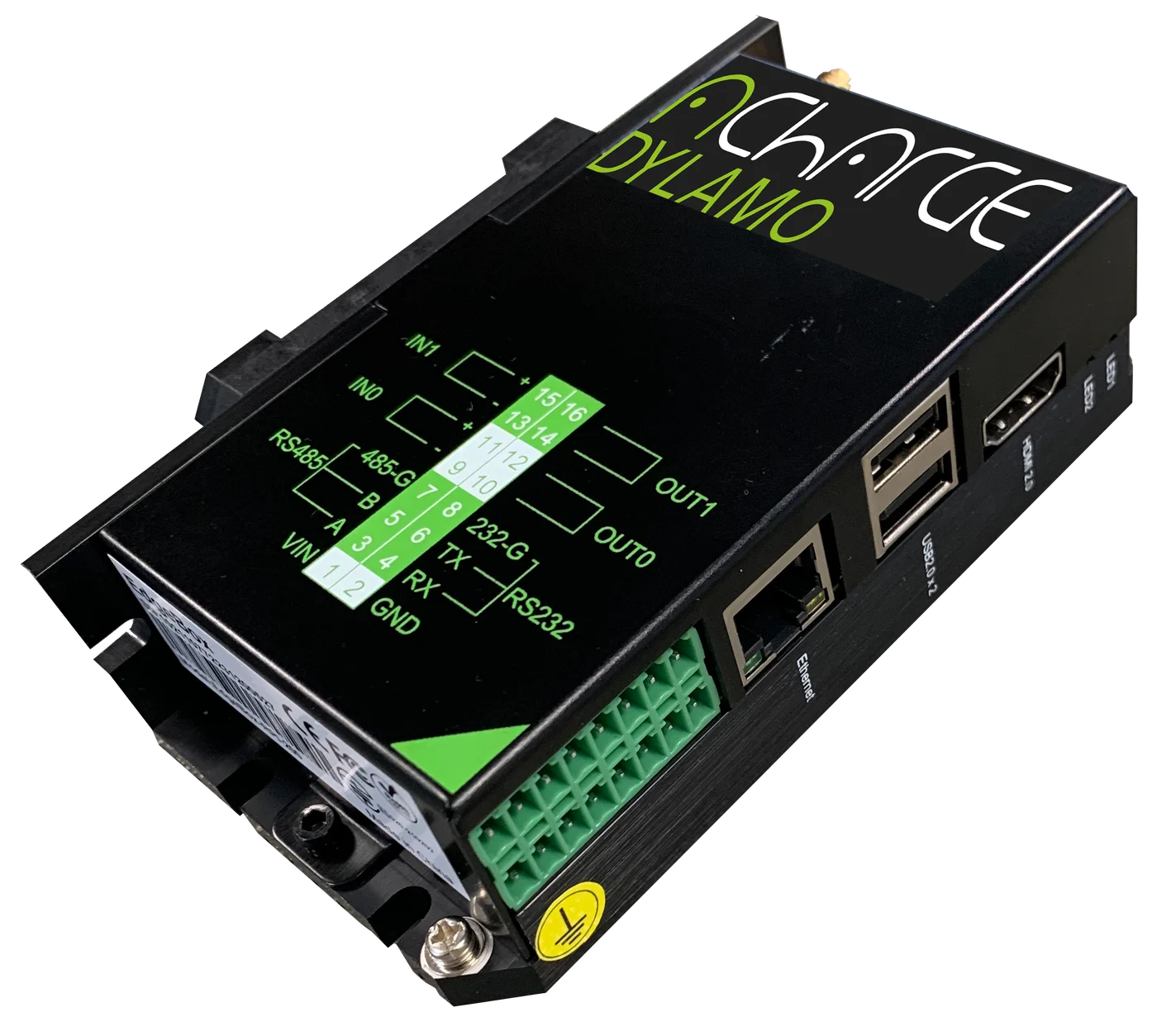
For this kind of site: aCharge DYLAMO
These sites typically have mixed-vendor wallboxes across several measuring points, often alongside a PV array and a heat pump — exactly what DYLAMO is built for.
FAQ
Common questions
What exactly does § 14a EnWG require?
How is the control signal connected technically?
Do all charge points have to come from the same vendor?
What happens during an internet outage?
Not operating it yourself, but recommending it? The partner programme pays you a share of every referred customer, for as long as they stay.
See the partner programmeOther kinds of site